
Understanding Compliance and Mandatory Training
Understanding Compliance and Mandatory Training in the Workplace
Organisations today work in environments where rules, safety standards, and workplace expectations are always changing. To keep up with these requirements, many organisations use structured training as part of their compliance programs.
Two terms you’ll often hear are mandatory training and compliance training. They are closely related, but they don’t mean exactly the same thing and they serve different purposes in workplace learning.
Understanding the difference helps employees and leaders see why certain training is required and how it supports workplace safety, good governance, and overall performance.

What is Mandatory Training?
Mandatory training is usually introduced after a specific event, incident, or risk is identified in an organisation.
For example, if a workplace safety incident happens or a security breach reveals a gap in a process, the organisation may create training to address that issue. The goal is to help employees understand what went wrong and how to prevent the same problem in the future.
Because it responds to a particular situation, mandatory training is often reactive. It is usually assigned to a specific group of employees or teams who need to follow new procedures or expectations.
Over time, this training may also become part of onboarding for new staff, helping ensure that the lessons learned are built into everyday workplace practices.
Key characteristics of mandatory training include:
- Introduced after a specific incident or risk
- Assigned to the employees or teams involved
- Focused on preventing the issue from happening again
- Often required to be completed within a short timeframe
What is Compliance Training?
Compliance training takes a broader and more proactive approach.
Instead of responding to a single incident, compliance training helps employees understand the laws, regulations, policies, and standards that guide how an organisation operates.
This training is usually ongoing and delivered across the whole organisation. Common topics include:
- Workplace health and safety
- Privacy and data protection
- Workplace conduct
- Regulatory responsibilities
- Information security
Key characteristics of compliance training include:
- Proactive and preventative
- Ongoing or repeated regularly
- Delivered across the organisation
- Focused on laws, policies, and industry standards
Why Effective Training Design Matters
Simply assigning training is not enough. For training to be effective, it needs to be clear, relevant, and engaging for employees.
This is where good learning design and digital learning make a difference. By using clear learning goals, real-life scenarios, and visual methods like whiteboard animation, organisations can turn complex rules and policies into learning that is easier to understand.
When designed well, compliance training can:
- Help employees remember information better
- Increase engagement with the training
- Encourage responsible behaviour at work
- Reduce risks for the organisation
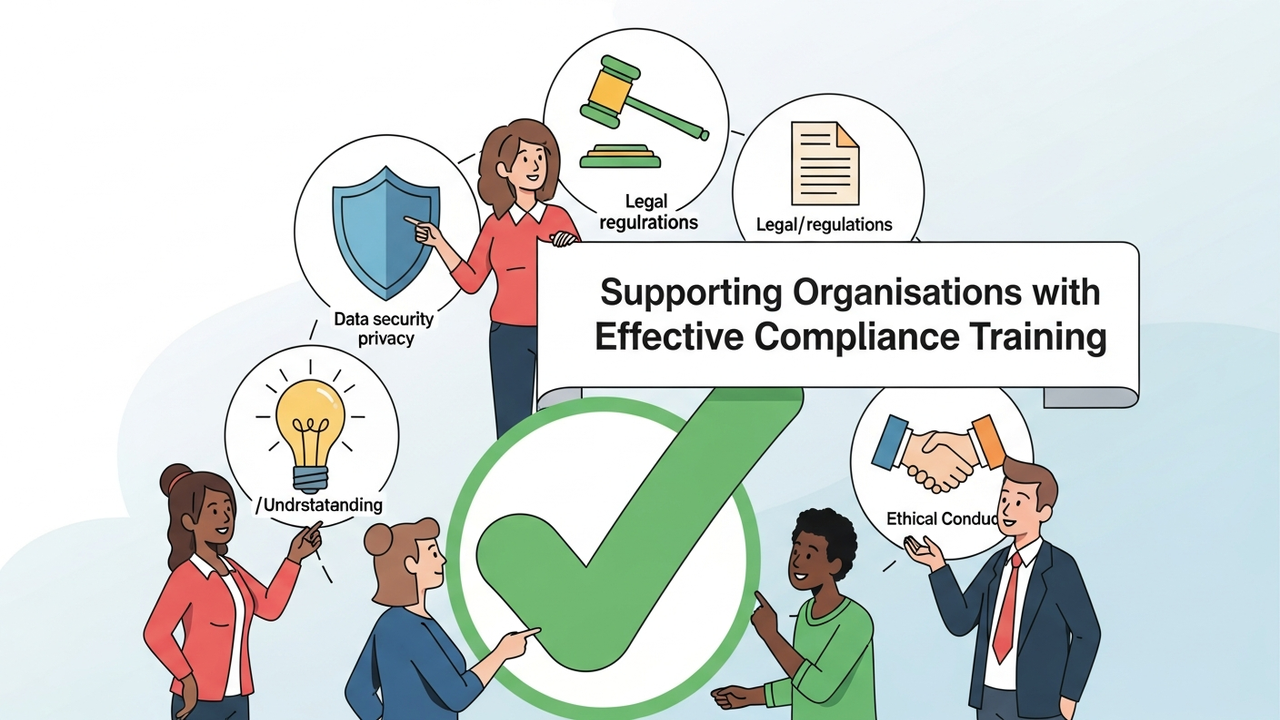
Supporting Organisations with Effective Compliance Training
At Ekalearn, we help organisations transform complex compliance requirements into clear, engaging learning experiences through instructional design, digital learning solutions, and visual storytelling.
Whether developing compliance modules, scenario-based training, or animated learning content, the goal is simple: help organisations build capability while keeping their people informed, confident, and compliant.